Plants grow in response to temperature
Plants grow in response to temperature rather than calendar days. Growing Degree Days (GDD) measure the accumulated heat required for crops to grow and develop.
Instead of counting days after planting, farmers and scientists use heat accumulation to predict important crop growth stages such as germination, flowering, and maturity.
This concept allows farmers to better understand crop development and plan farming activities more accurately.
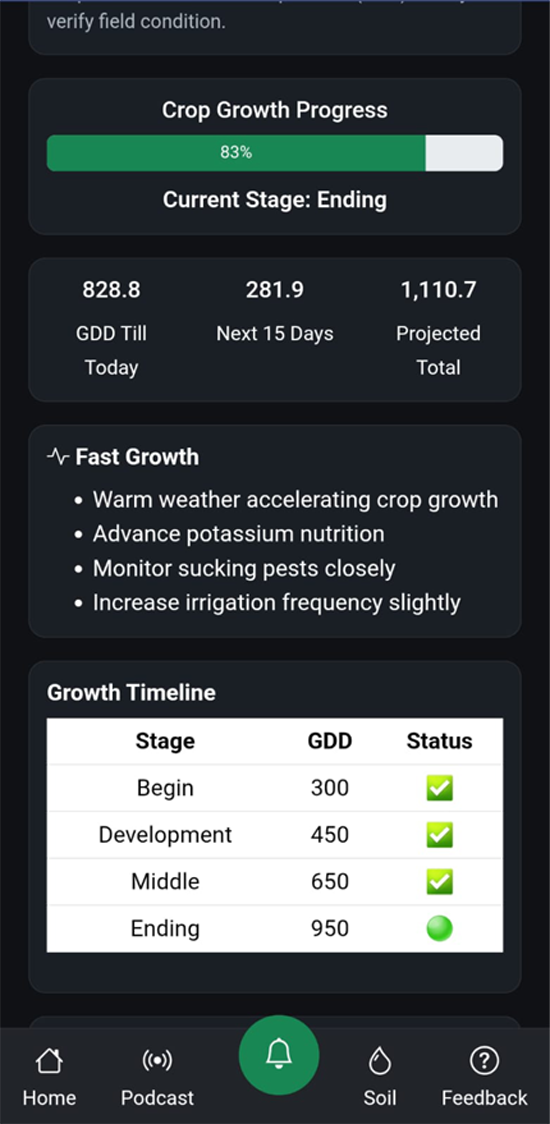
How Growing Degree Days Work
Each crop has a base temperature below which plant growth slows down or stops completely. For many agricultural crops, a base temperature of 10°C is commonly used.
Growing Degree Days are calculated by measuring the difference between the daily average temperature and the base temperature. When temperatures rise above the base level, crops accumulate heat units that contribute to plant growth.
The GDD Logic
Daily GDD = [ (Tmax + Tmin) / 2 ] - Tbase
Note: CropSpy automates this calculation using precise local weather station data for your specific farm location.
Why GDD is Critical
Weather conditions can vary from year to year, so crop development may occur earlier or later depending on temperature patterns. By tracking accumulated heat units, farmers can better estimate crop growth stages and plan management practices accordingly.
Many insects and plant diseases also develop based on accumulated heat units, making GDD an important tool for crop protection planning.
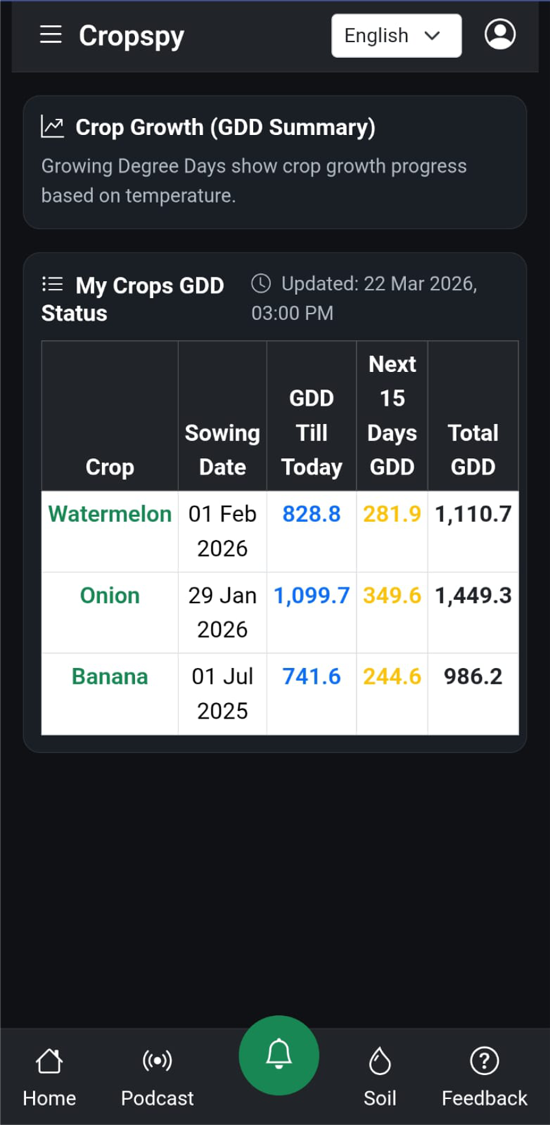
Using CropSpy for GDD
CropSpy calculates Growing Degree Days using weather data such as daily temperature values. The platform uses a base temperature of 10°C to estimate heat accumulation for crop growth.
By tracking accumulated GDD values, CropSpy helps farmers monitor crop development and understand how weather conditions are influencing plant growth.
How to access your GDD data
Farmers can easily view Growing Degree Days inside the CropSpy platform. After selecting their location and crop, CropSpy calculates accumulated heat units based on daily temperature data, allowing for informed management decisions.